Launch offer — valid today only

📄 Digital book in PDF · read it on your phone or print it

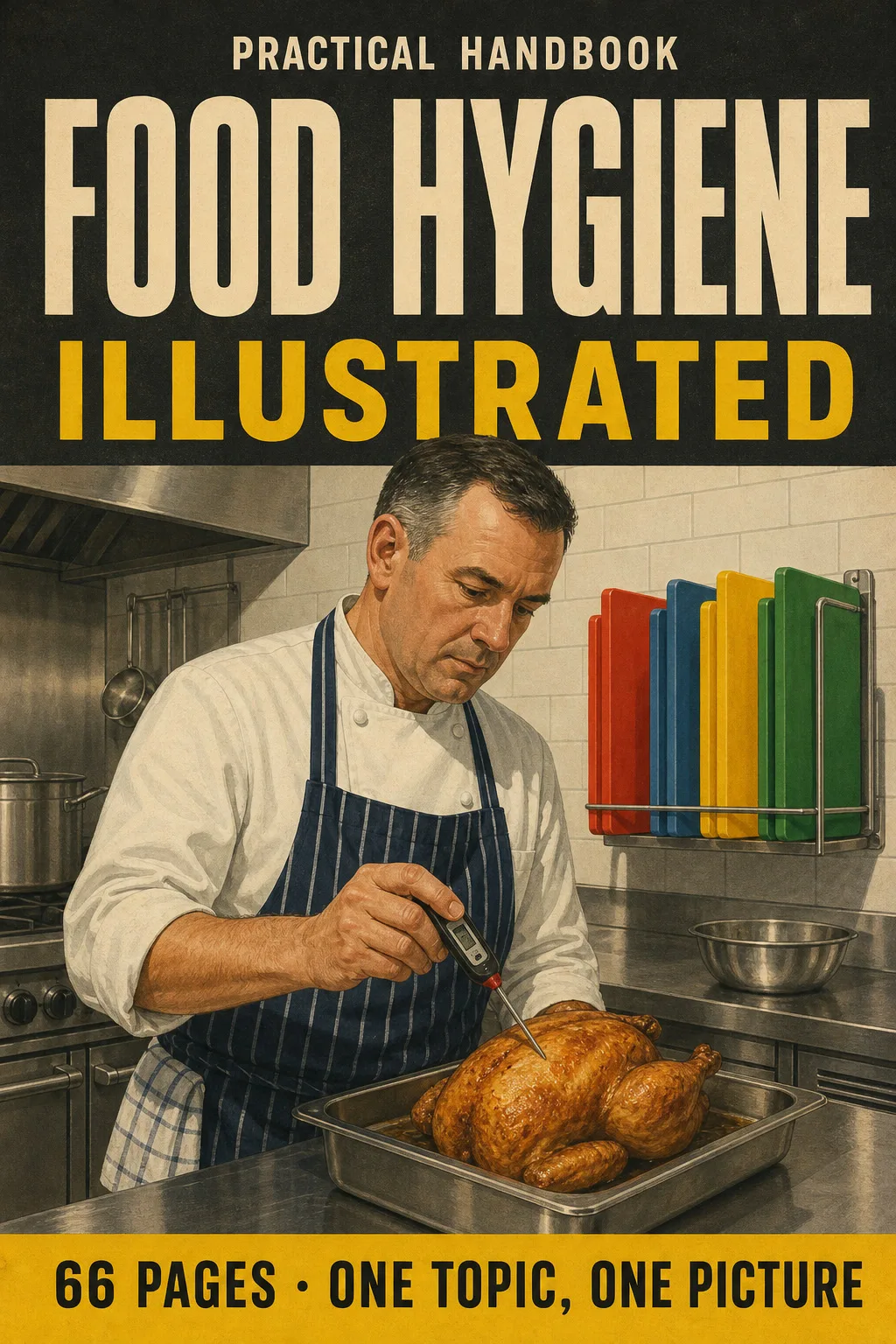
Level 2 Food Hygiene for UK Kitchens in Drawings One Topic on Every Page

A study book to go with your Level 2 course: the danger zone, cooking and hot-holding temperatures, fridge order, the 14 allergens, two-stage cleaning and HACCP. One drawn page per topic, checked against UK guidance from the FSA and Food Standards Scotland. 66 illustrated pages.

START REVISING THIS WAY

🔒 Secure checkout · PDF by email · 30-day guarantee

Every topic, its own pageEach rule drawn, with the explanation beside it
66 illustrated pages9 parts, from what food hygiene is for to the opening and closing checks
Up-to-date sourcesFood Standards Agency, Food Standards Scotland and the Food Safety Act 1990
PDF by emailFormat

Look Inside the Book

Every page has one big drawing and a box with the temperatures, rules and steps you need to know:

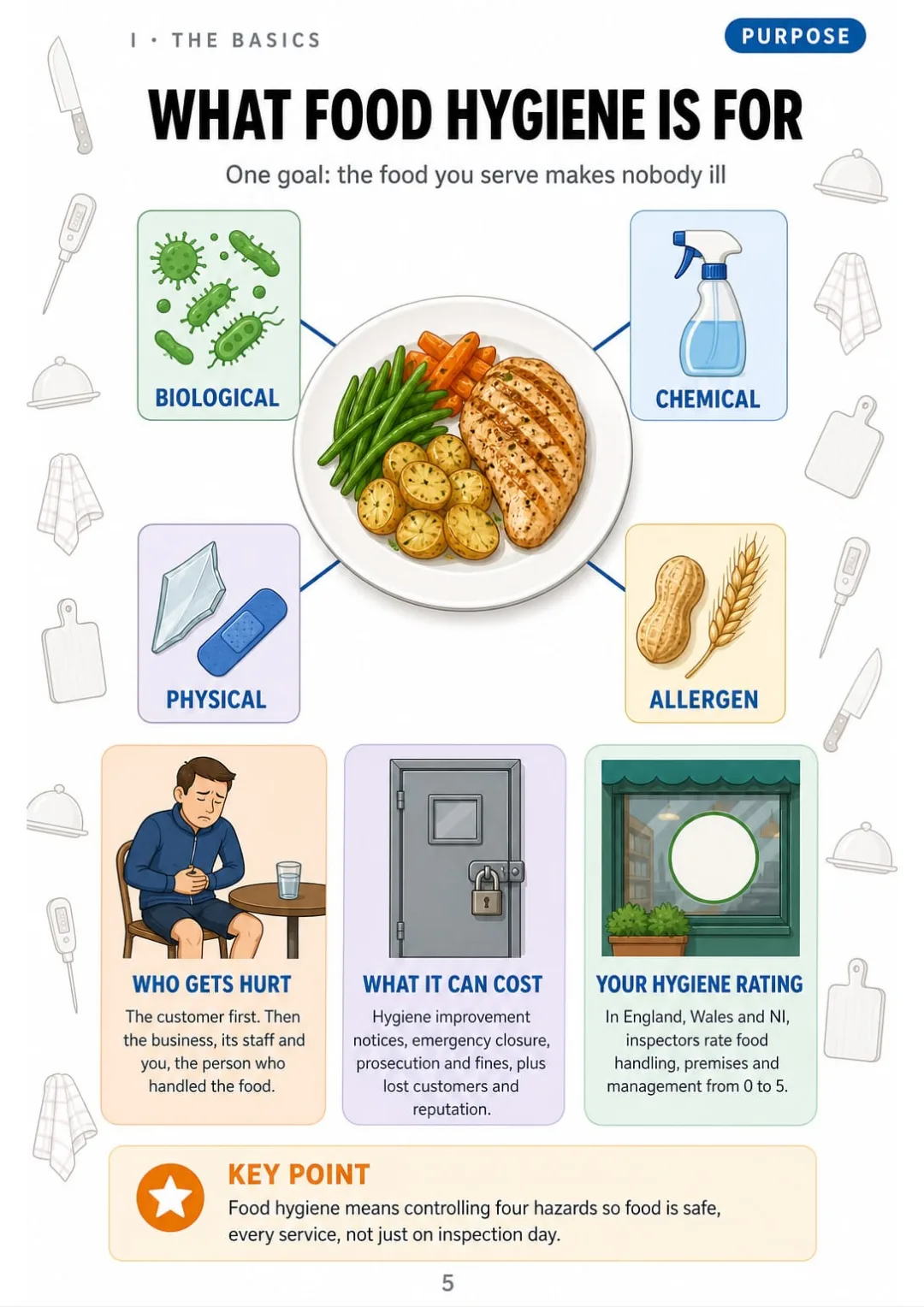
One plate, four hazards: biological, chemical, physical and allergen.
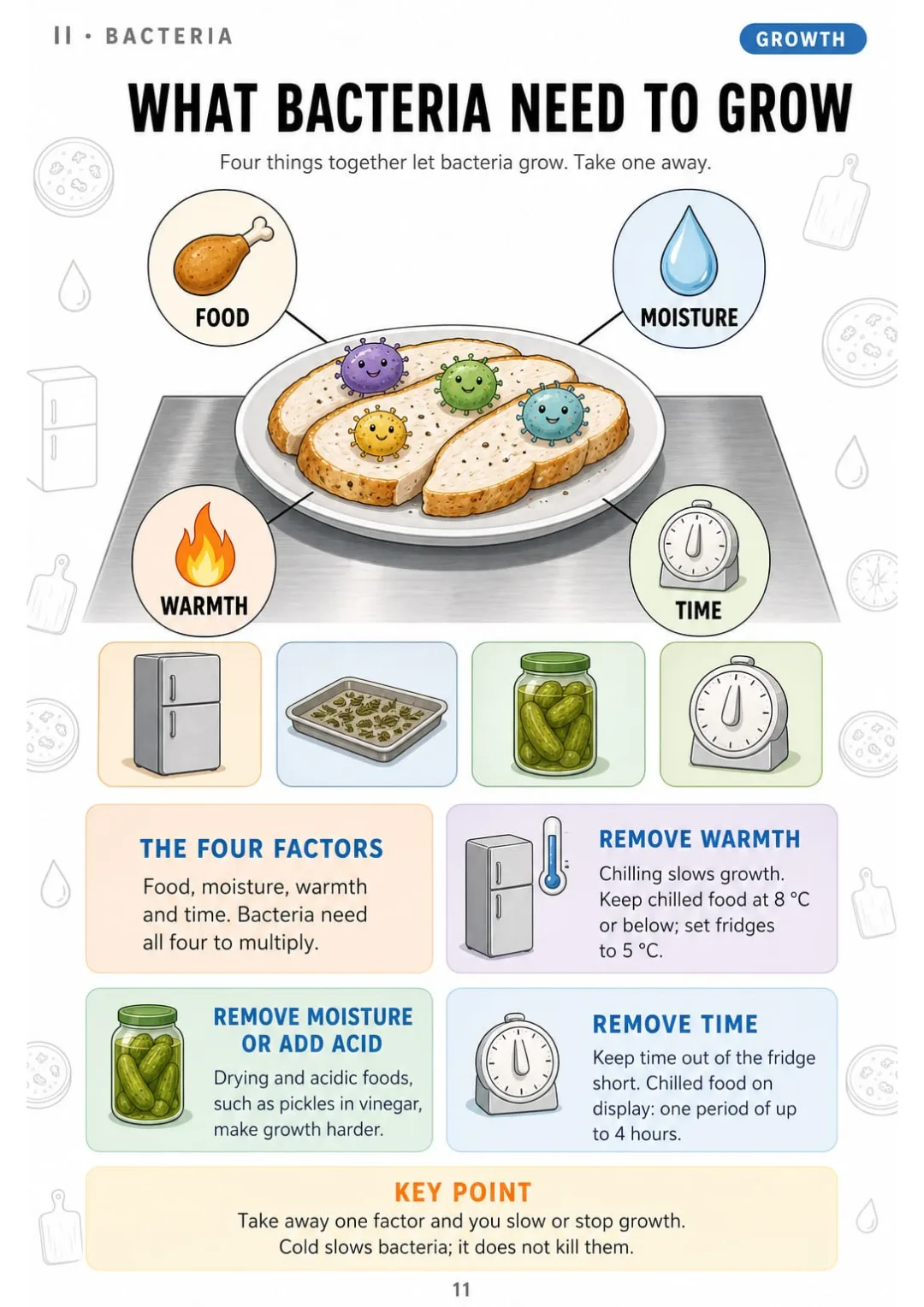
The 4 things bacteria need, drawn around one plate, and how to remove each.
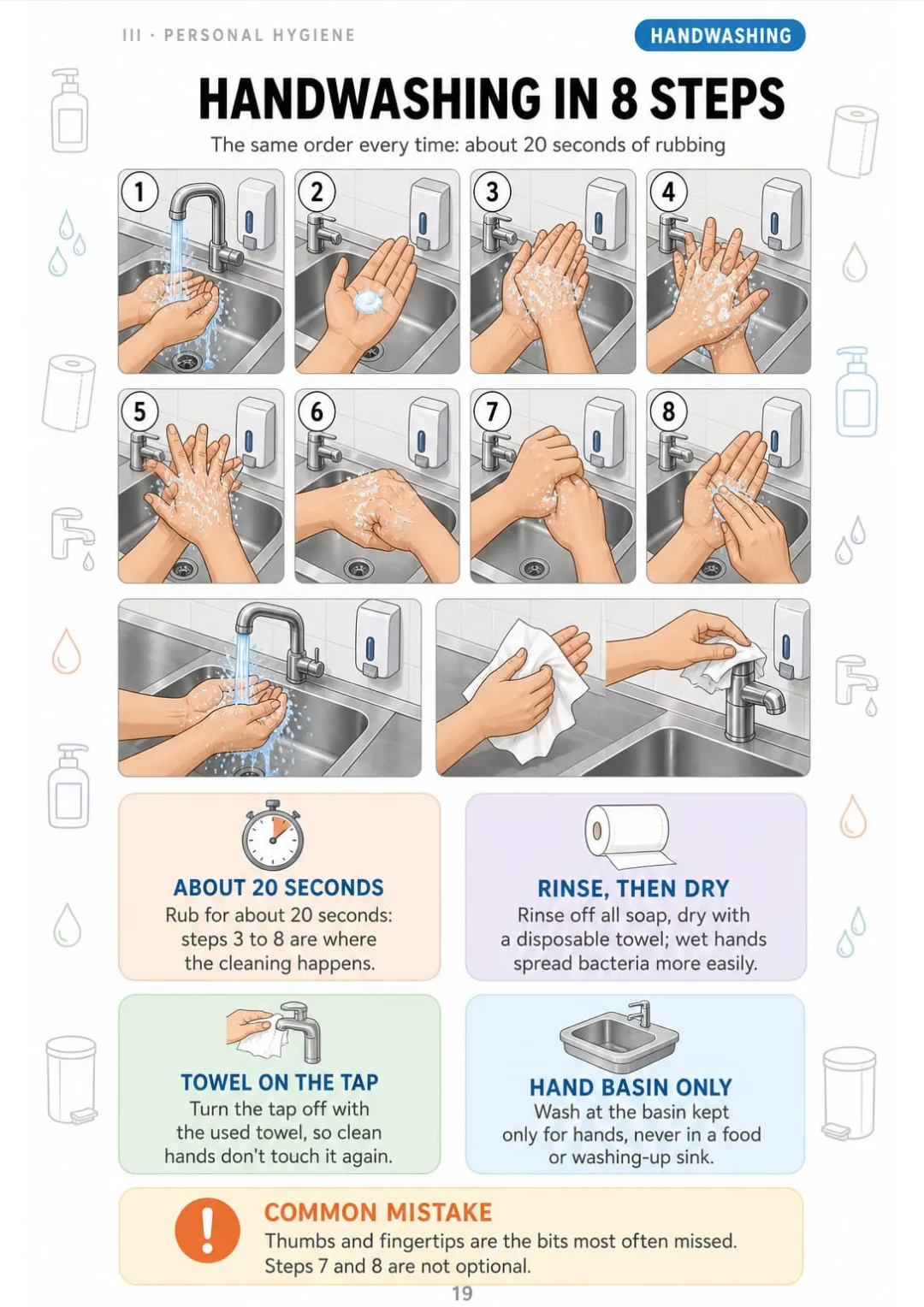
8 drawn steps, about 20 seconds of rubbing, tap off with the towel
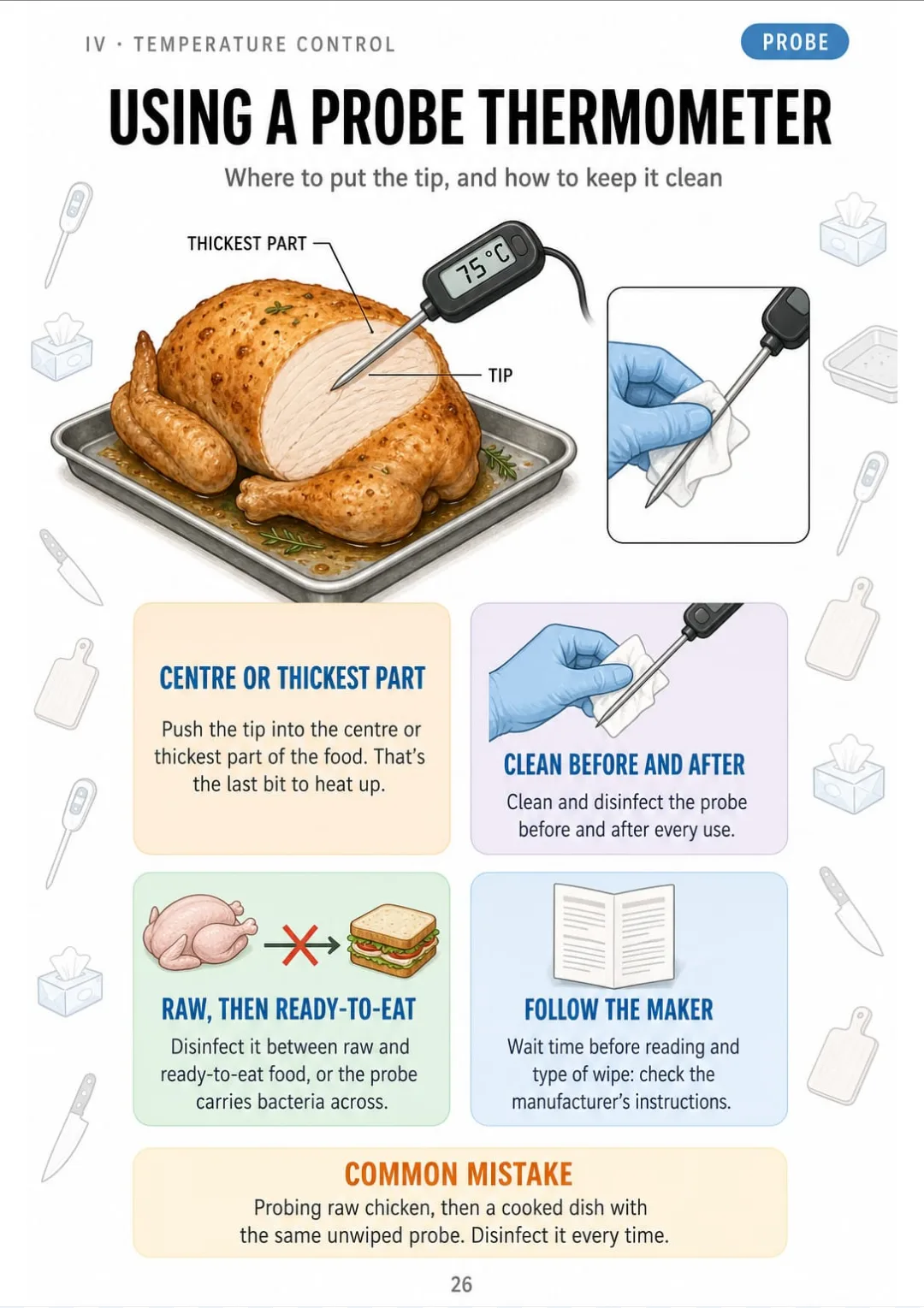
Probe the centre or thickest part, and disinfect the probe before and after each use.
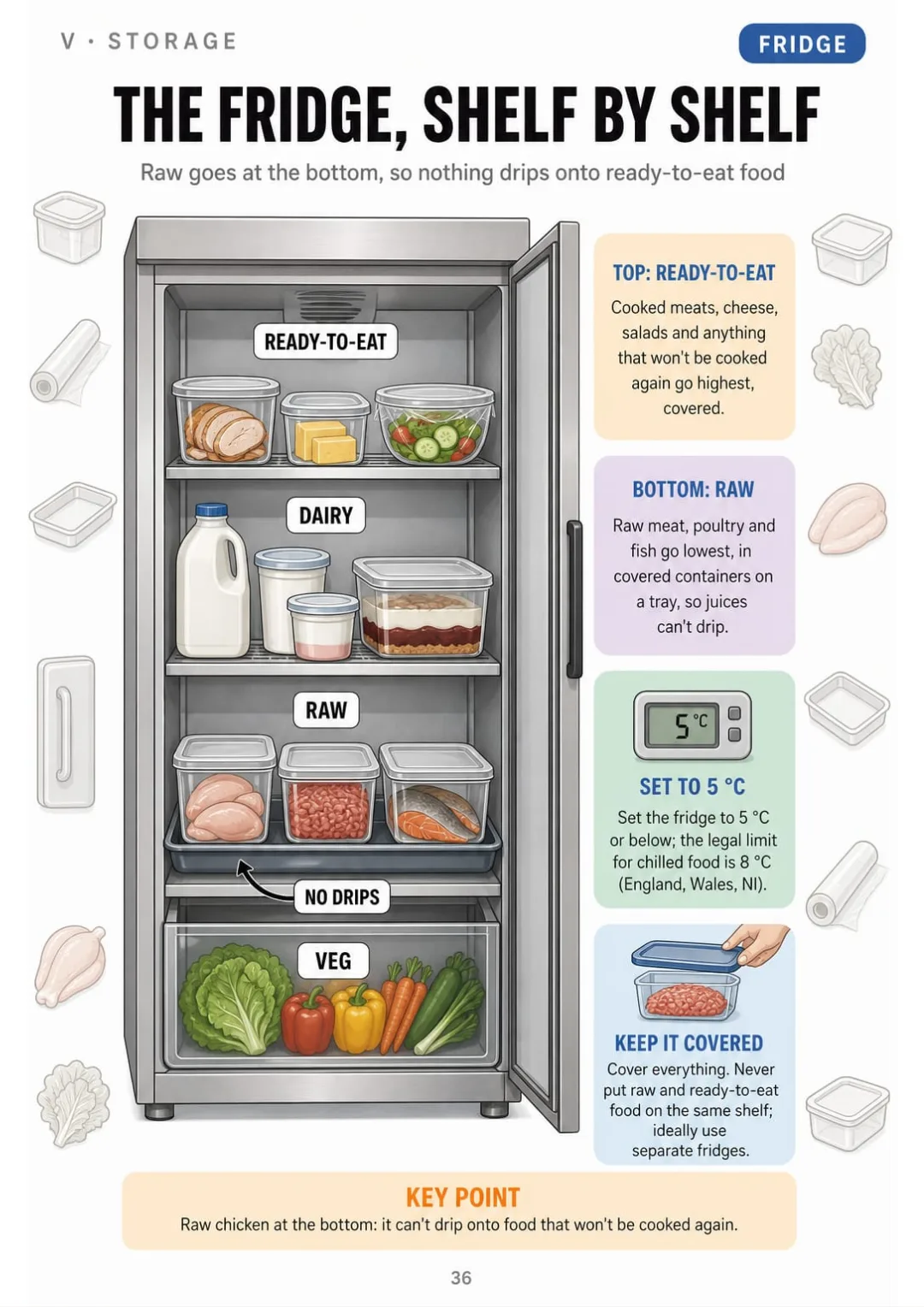
Ready-to-eat on top, dairy in the middle, raw covered at the bottom, fridge set to 5 °C.
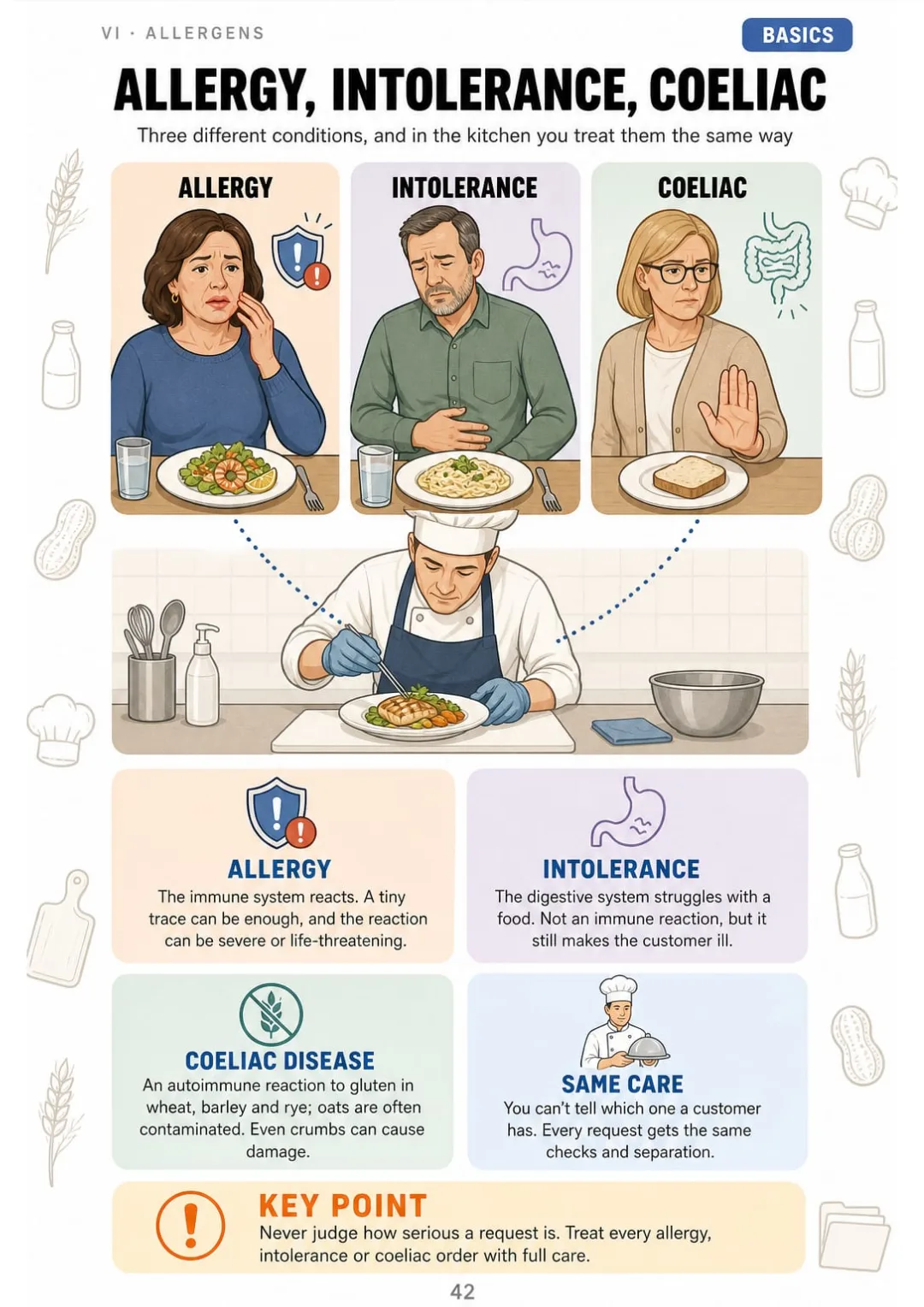
Allergy is immune, intolerance is digestive, coeliac is autoimmune: one kitchen rule for all three.
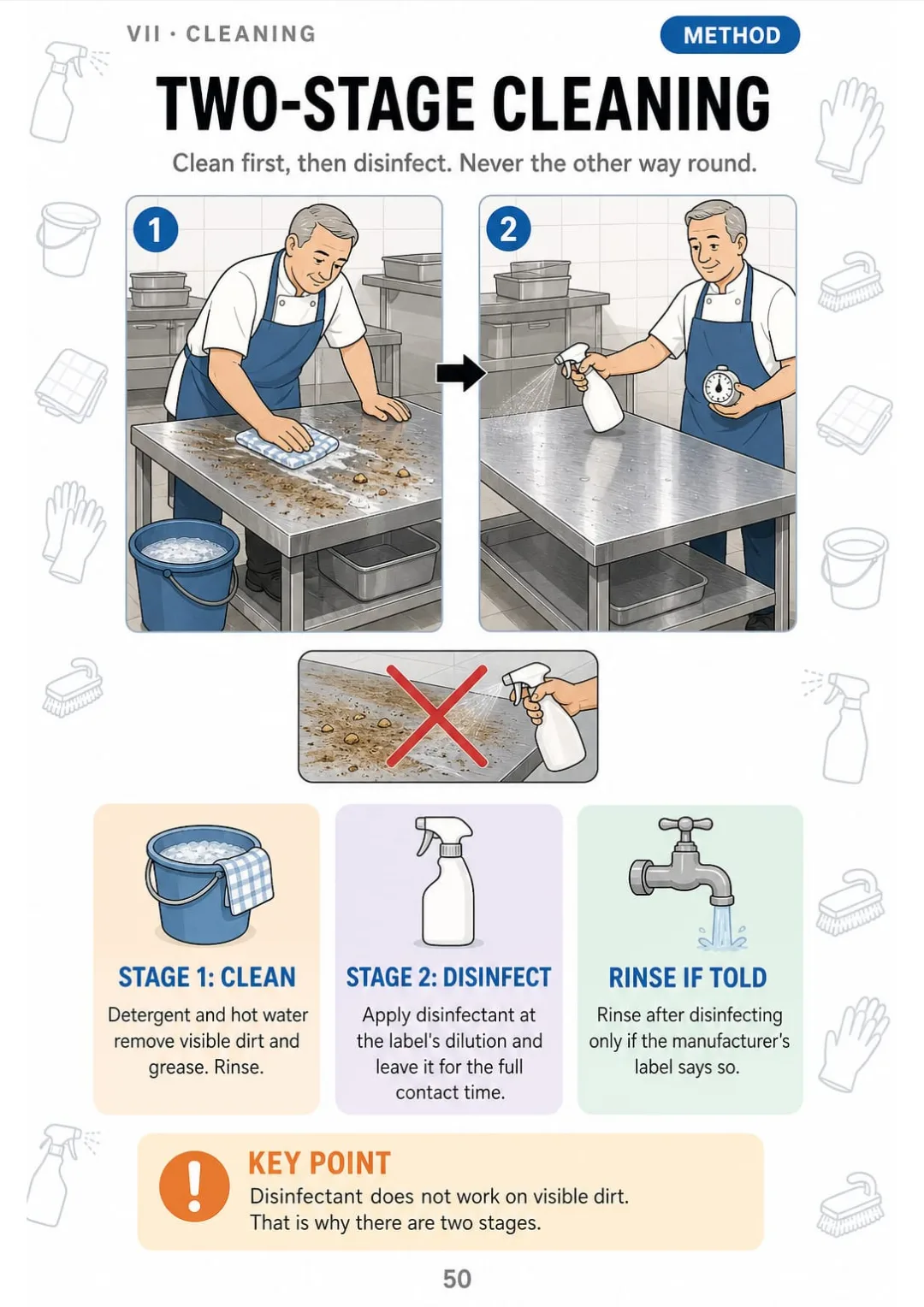
Stage 1 detergent removes dirt, stage 2 disinfectant reduces bacteria to a safe level over its full contact time.
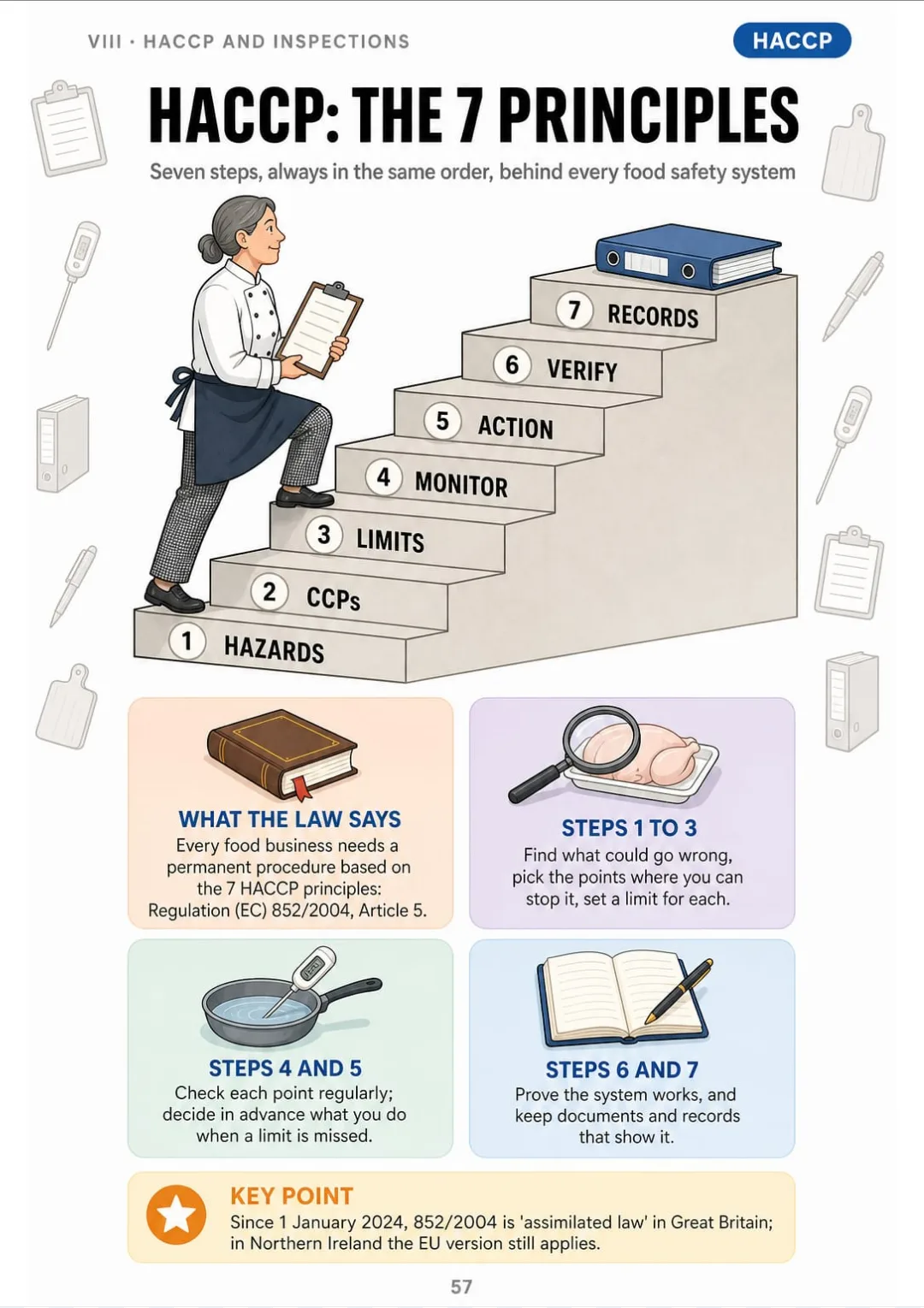
The 7 HACCP principles, step by step: hazards, CCPs, limits, monitoring, action, verification, records

Swipe to see more →

These are real pages from the book. The table of contents is the full one: 9 parts and 62 topics.

The Problem Isn't You. It's How It Was Explained to You.

You're reheating soup for service, the probe reads 72 °C and the pass is waiting. Back on the heat, or good to go?

The course gave you cooking, hot holding and reheating as a list of numbers. Read as one block, 63, 75 and 82 °C start to swap places.

8 drawn steps, about 20 seconds of rubbing, tap off with the towel

In the book, reheating has its own drawing: the probe in the thickest part, 75 °C, and Scotland's 82 °C marked beside it. One look and the soup goes back on the heat.

Handwashing in 8 steps, the danger zone, the fridge shelf by shelf, the probe thermometer, two-stage cleaning and the 14 allergens each have their own page, laid out the same way.

So the numbers stay where they belong, and you answer the question without going back to the course notes.

COMPARE FOR YOURSELF

The Same Topic, Two Ways to Study It

THIS
  • The course notes: line after line
  • Food, moisture, warmth and time explained only in words
  • You reach the test still unsure
Pathogenic bacteria require a number of conditions to multiply to levels capable of causing illness. These include a suitable source of nutrients, typically present in high-protein foods such as meat, poultry, dairy products and cooked rice; the availability of moisture; a favourable temperature, with most pathogens multiplying most rapidly between 8 °C and 63 °C; and sufficient time, since under ideal conditions a population may double approximately every 10 to 20 minutes. Control measures should therefore restrict one or more of these factors.
FOR THIS
  • What bacteria need, in one drawing
  • The four conditions and how to remove each, in a box
  • You see it and you get it
The 4 things bacteria need, drawn around one plate, and how to remove each.
CONTENTS

Take a Look at the 9 Parts and 62 Topics

The basics, bacteria and contamination, personal hygiene, temperature control, storage, allergens, cleaning and premises, HACCP and inspections, and revision: 66 pages, all illustrated

IThe Basics · pp. 5-10
  1. What Food Hygiene Is For
  2. The Law in One Page
  3. The 4 Cs
  4. Four Types of Hazard
  5. Food Poisoning and Who Is Most at Risk
  6. Your Level 2 Certificate: What It Proves
IIBacteria and Contamination · pp. 11-18
  1. What Bacteria Need to Grow
  2. One Becomes Two Million
  3. The Danger Zone: 8 °C to 63 °C
  4. High-Risk Foods
  5. The Bacteria You Should Know
  6. Spores, Toxins and Rice
  7. Norovirus
  8. Cross-Contamination: Raw to Ready-to-Eat
IIIPersonal Hygiene · pp. 19-25
  1. Handwashing in 8 Steps
  2. When to Wash Your Hands
  3. Gloves Are Not a Shortcut
  4. Clothing, Hair, Jewellery and Nails
  5. Cuts and Blue Plasters
  6. Fit for Work: The 48-Hour Rule
  7. Telling Your Manager
IVTemperature Control · pp. 26-35
  1. Using a Probe Thermometer
  2. Checking Your Probe: 0 °C and 100 °C
  3. Fridges: 5 °C Target, 8 °C Legal Limit
  4. Freezers: −18 °C
  5. Checking Deliveries
  6. Defrosting Safely
  7. Cooking: 75 °C for 30 Seconds
  8. Hot Holding: 63 °C or Above
  9. Cooling Within 90 Minutes
  10. Reheating: 75 °C, 82 °C in Scotland
VStorage · pp. 36-41
  1. The Fridge, Shelf by Shelf
  2. Dry Stores
  3. FIFO: First In, First Out
  4. Use-By vs Best-Before
  5. Labelling What You Make
  6. Leftovers, Open Tins and Cooked Rice
VIAllergens · pp. 42-49
  1. Allergy, Intolerance and Coeliac Disease
  2. The 14 Allergens
  3. The Tricky Ones
  4. Loose Food: Allergen Information on Request
  5. Natasha's Law: PPDS Labels
  6. Stopping Allergen Cross-Contact
  7. Taking an Allergy Order
  8. Anaphylaxis: What It Looks Like
VIICleaning and Premises · pp. 50-56
  1. Two-Stage Cleaning
  2. Detergent, Disinfectant, Sanitiser
  3. Contact Time and Dilution
  4. Clean As You Go and the Cleaning Schedule
  5. Colour-Coded Boards, Cloths and Dishwashers
  6. Pests: Signs and Prevention
  7. Waste and the Premises
VIIIHACCP and Inspections · pp. 57-62
  1. HACCP: The 7 Principles
  2. Critical Control Points in a Real Kitchen
  3. SFBB, CookSafe and Safe Catering
  4. Records and Due Diligence
  5. Food Hygiene Ratings: 0 to 5
  6. When the EHO Visits
IXRevision and Practice · pp. 63-66
  1. All the Numbers on One Page
  2. The Most Frequent Kitchen Mistakes
  3. Before Your Level 2 Test
  4. Opening and Closing Checks

One Page, One Topic, All Clear

Think of it this way:

The EHO is standing in your kitchen, opens the fridge and asks why the raw chicken is on the bottom shelf. You need the answer now, not after a search through the course notes.

In the book you open the fridge page and see it drawn shelf by shelf: ready-to-eat on top, dairy in the middle, raw meat covered at the bottom, and the fridge set to 5 °C.

Ready-to-eat on top, dairy in the middle, raw covered at the bottom, fridge set to 5 °C.

The same goes for the danger zone, cooking to 75 °C, hot holding at 63 °C, the 14 allergens and two-stage cleaning: each one on its own page.

Food Hygiene Illustrated is 62 topics on 66 drawn pages, in 9 parts, and it ends with all the numbers on one page, the most frequent kitchen mistakes and a checklist for before your Level 2 test.

What you see drawn, you don't have to memorize.

What's Inside Food Hygiene Illustrated:

Ipp. 5-10

The Basics

What food hygiene is for, the law on one page, the 4 Cs, the four types of hazard, who is most at risk and what your Level 2 certificate proves.

IIpp. 11-18

Bacteria and Contamination

What bacteria need to grow, how fast they multiply, the danger zone, high-risk foods, the bacteria to know, spores and rice, norovirus and cross-contamination.

IIIpp. 19-25

Personal Hygiene

Handwashing in 8 steps, when to wash, why gloves aren't a shortcut, clothing and jewellery, blue plasters, the 48-hour rule and telling your manager.

IVpp. 26-35

Temperature Control

Probe thermometers and how to check them, fridges and freezers, deliveries, defrosting, cooking, hot holding, cooling and reheating, including Scotland's 82 °C.

Vpp. 36-41

Storage

The fridge shelf by shelf, dry stores, FIFO, use-by vs best-before, labelling what you make, and leftovers, open tins and cooked rice.

VIpp. 42-49

Allergens

Allergy vs intolerance vs coeliac disease, the 14 allergens, the tricky ones, loose food, PPDS labels, cross-contact, taking an allergy order and anaphylaxis.

VIIpp. 50-56

Cleaning and Premises

Two-stage cleaning, detergent vs disinfectant vs sanitiser, contact time and dilution, clean as you go, colour coding, pests, waste and the premises.

VIIIpp. 57-62

HACCP and Inspections

The 7 HACCP principles, critical control points in a real kitchen, SFBB and CookSafe, records and due diligence, hygiene ratings and the EHO visit.

IXpp. 63-66

Revision and Practice

All the numbers on one page, the most frequent kitchen mistakes, a checklist for before your test, and opening and closing checks.

At the end of the book: All the numbers on one page, the most frequent kitchen mistakes and a pre-test checklist.
Plus: 2 Free Books

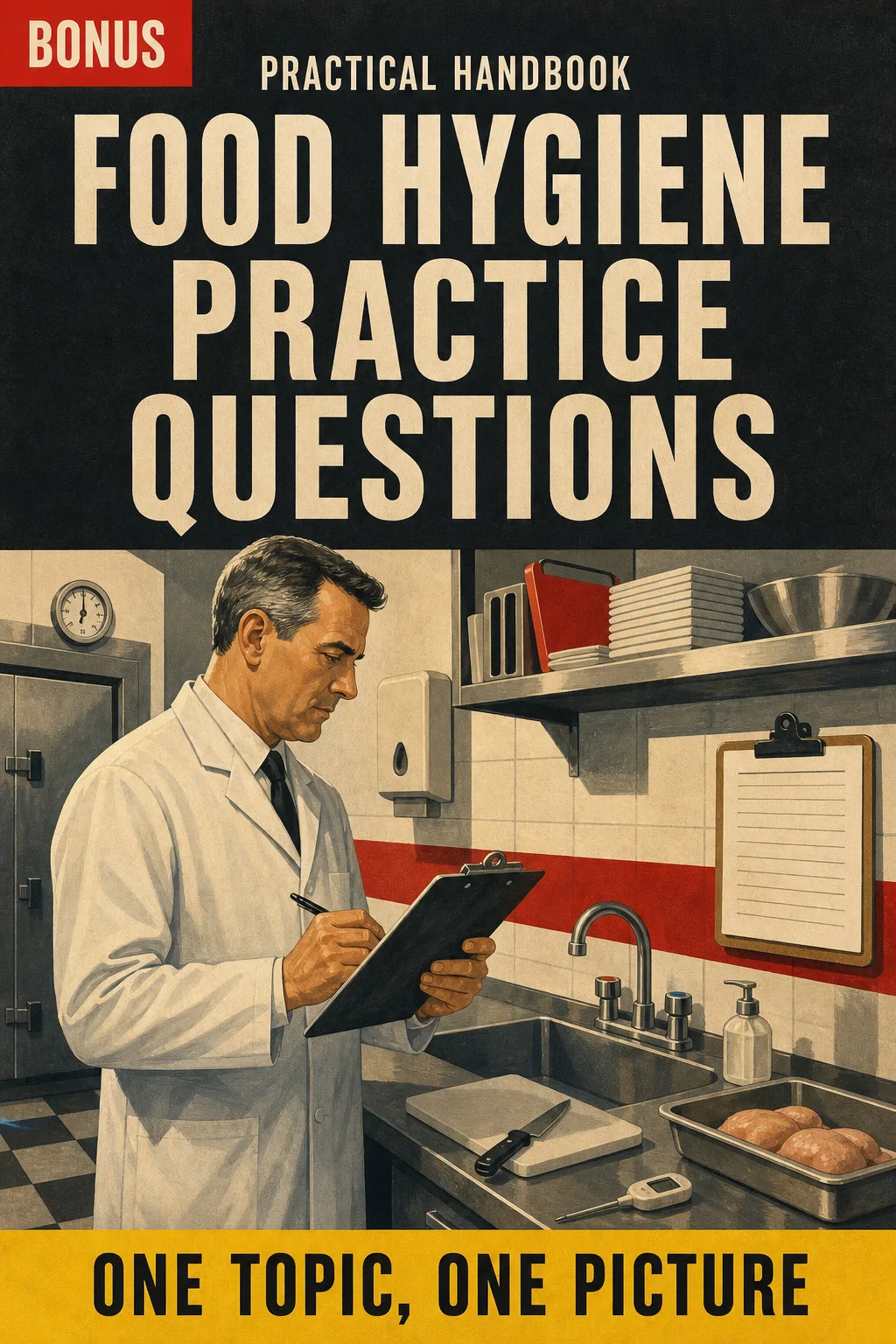
Food Hygiene Practice Questions

BONUS 1: «Food Hygiene Practice Questions»

Value on its own: US$ 17.90

Exam-style questions on every topic, each answer explained with the page it comes from, so you can test yourself before the course quiz.

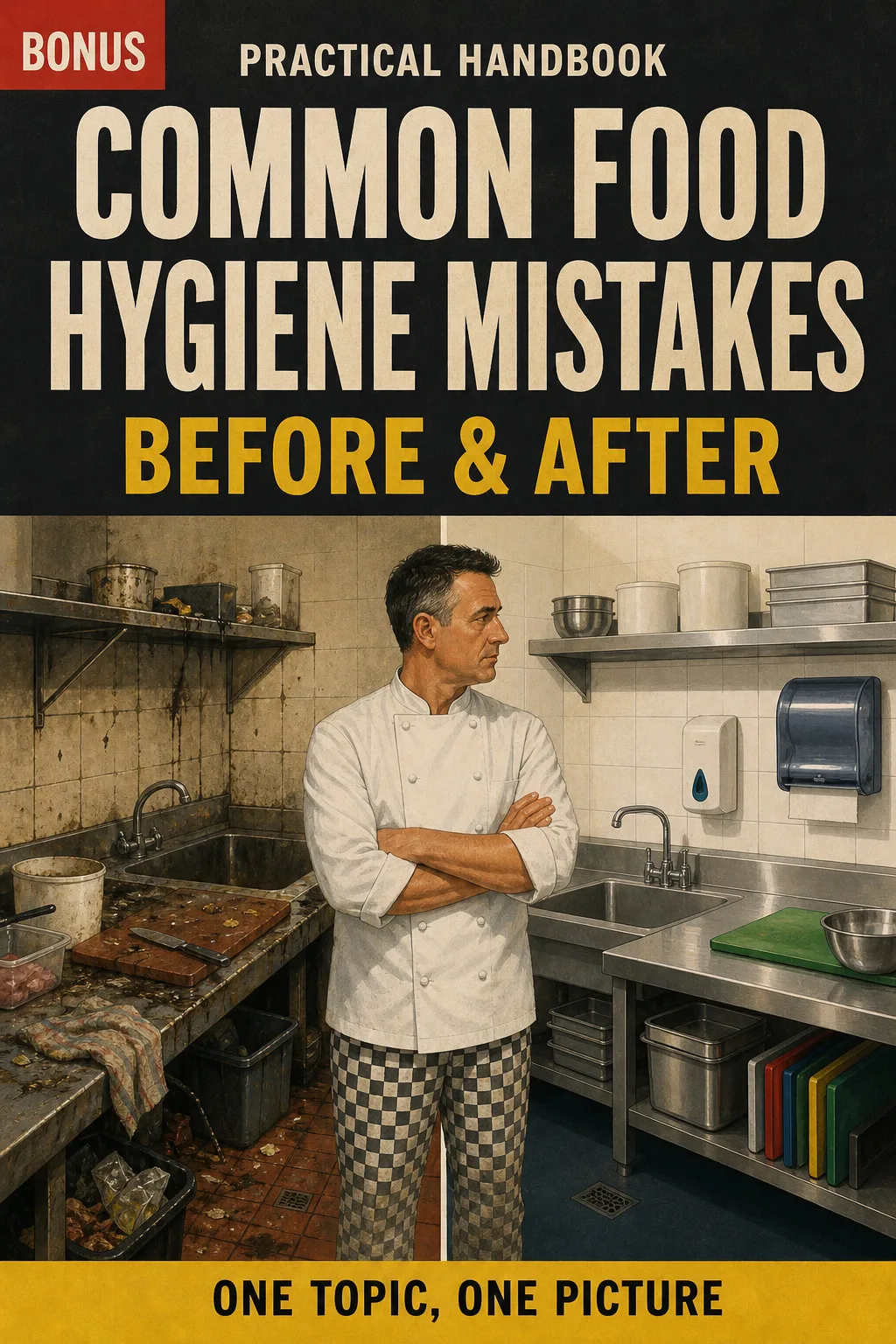
Common Food Hygiene Mistakes: Before & After

BONUS 2: «Common Food Hygiene Mistakes: Before & After»

Value on its own: US$ 14.90

The most frequent kitchen mistakes drawn side by side with the right way, so you spot them in your own kitchen before anyone else does.

Food Hygiene Illustrated with 2 Free Books

  • Food Hygiene Illustrated: 66 illustrated pagesUS$ 63
  • BONUS 1: Food Hygiene Practice QuestionsUS$ 17.90
  • BONUS 2: Common Food Hygiene Mistakes: Before & AfterUS$ 14.90
  • High-resolution PDF to printIncluded
Total value US$ 95.80
YOUR PRICE:
US$ 27
You save US$ 68.80
YES, I WANT FOOD HYGIENE ILLUSTRATED FOR US$ 27

📄 This is a digital PDF book sent to your email: nothing is printed or shipped.

Secure purchaseEncrypted payment30-day guarantee

PDF by email: We email you Food Hygiene Illustrated as a PDF, together with the two free books. It's a single payment: no installments, no extra charges.

Who This Book Is For

You're doing your Level 2 course

You're doing your Level 2 course

Each topic from the course on its own drawn page, so what you read online finally has a picture to hold on to.

Your test is this week

Your test is this week

Revise by looking: all the temperatures on one page, plus practice questions that point you to the page each answer comes from.

You already run a kitchen

You already run a kitchen

Print the pages you need and pin them up: fridge order, hot holding, allergens. Your team checks at a glance, before the EHO does.

Everything You Get Today

US$ 95.80US$ 27
YES, I WANT FOOD HYGIENE ILLUSTRATED FOR US$ 27

📄 This is a digital PDF book sent to your email: nothing is printed or shipped.

30DAYS
GUARANTEE

30-Day Guarantee

Try Food Hygiene Illustrated for 30 days, bonus books included.

We refund everything if the file won't open, if the book isn't what you see here, if you were charged twice or if the email doesn't arrive. Just email us.

You pay once. No subscriptions.

Frequently Asked Questions

Is it for me if I've worked in kitchens for years?

Yes. It isn't a beginner's course: it's the Level 2 content laid out one page per topic, so you can check a number or a rule at a glance and see why it's done that way. It's written around kitchens and catering, and the core (temperatures, allergens, storage, cleaning, HACCP) is the same in retail and manufacturing Level 2. If you're doing Level 3, it's a clear refresher of the Level 2 base, not the full Level 3 syllabus.

Where does the content come from?

It's checked against current Food Standards Agency guidance (including Safer Food, Better Business), Food Standards Scotland's CookSafe, the Food Safety Act 1990 and the Food Information Regulations 2014. Where Scotland does things differently, the page says so.

Is it official material?

No. It's an independent study book. It isn't produced or endorsed by the FSA, Food Standards Scotland, any local authority or any awarding body.

Does it replace my food hygiene course?

No. Your certificate comes from your course and its provider. The book helps you understand and revise what the course covers, and keep it to hand at work.

Are the practice questions the ones in the test?

No. They're written for this book, in the style of a Level 2 quiz, and each answer tells you which page it comes from.

When and how does it arrive?

The book and the 2 bonus books arrive as PDFs by email, at the address you enter at checkout.

Do I have to pay every month?

No. It's a one-off payment, with no subscription.

Can I have it on paper?

Yes, you can print it. The pages are designed to print clearly at home or at a print shop, so you can keep them in the kitchen.

How do refunds work?

You have 30 days. We refund everything if the file won't open, if the book isn't what you see on this page, if you were charged twice or if the email doesn't arrive: just email us.

Before You Close This Page

No more rereading the course and losing it by morning.

Fridge order, temperatures and allergens: you see them drawn, and that's it.

You walk into the test, or meet the inspector, knowing where everything is.

Drawings make studying faster.

The book is right below.

One-time payment: US$ 27 · Guarantee: 30 days · PDF by email

YES, I WANT FOOD HYGIENE ILLUSTRATED FOR US$ 27

📄 This is a digital PDF book sent to your email: nothing is printed or shipped.